

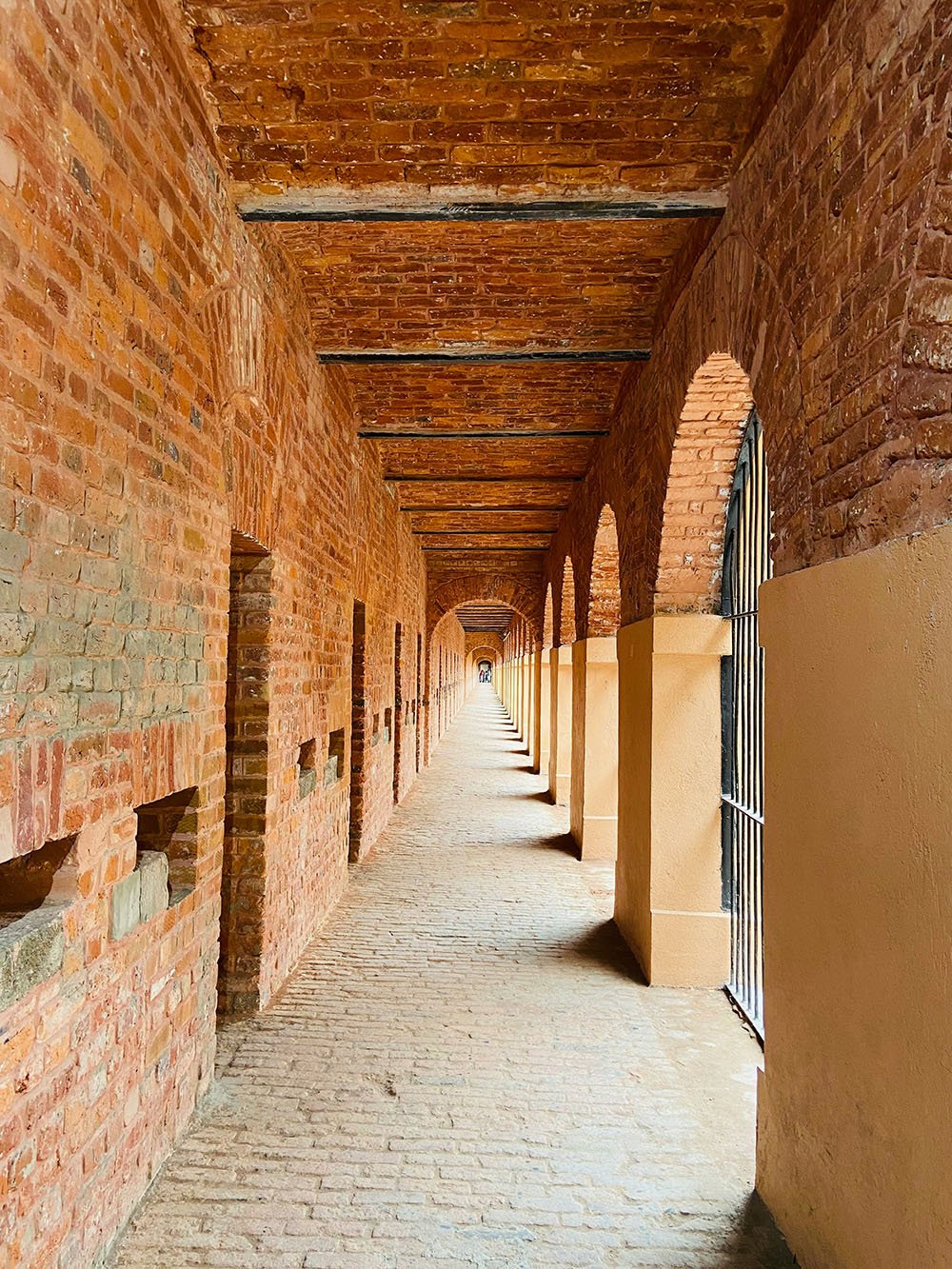
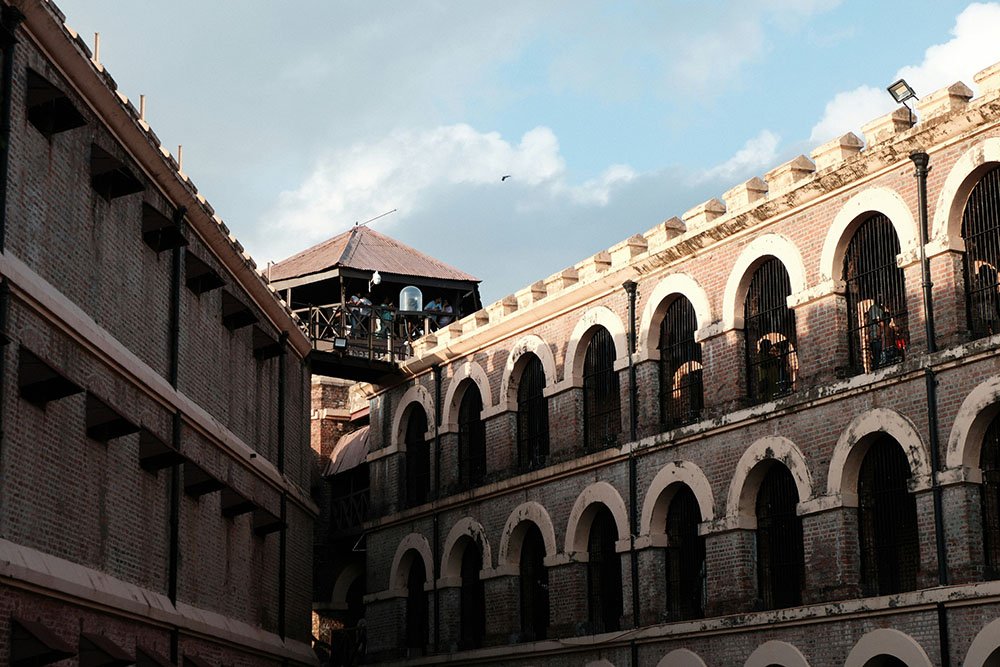
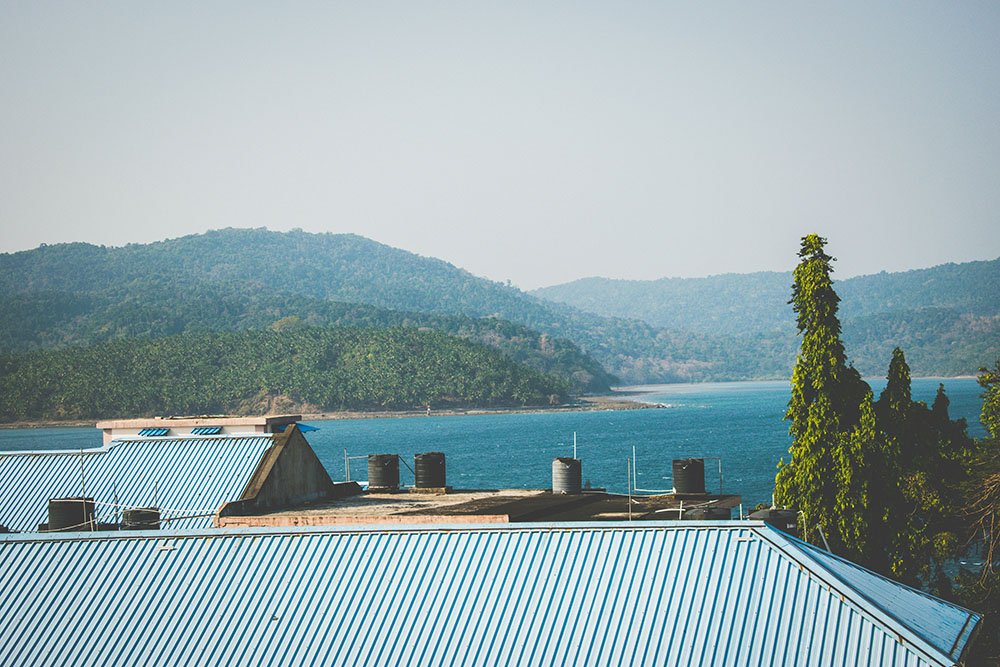
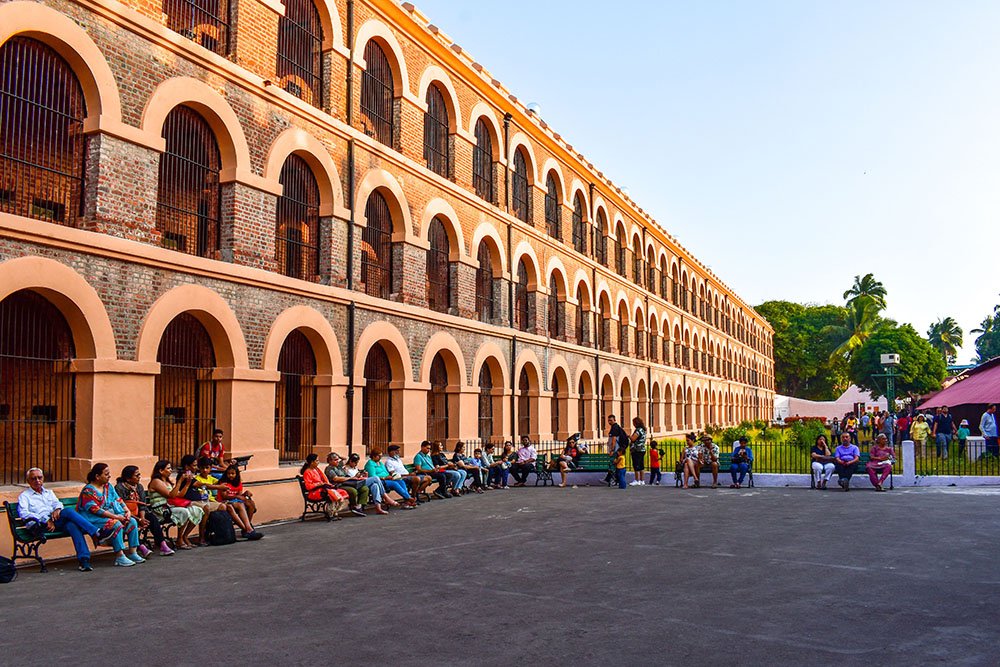
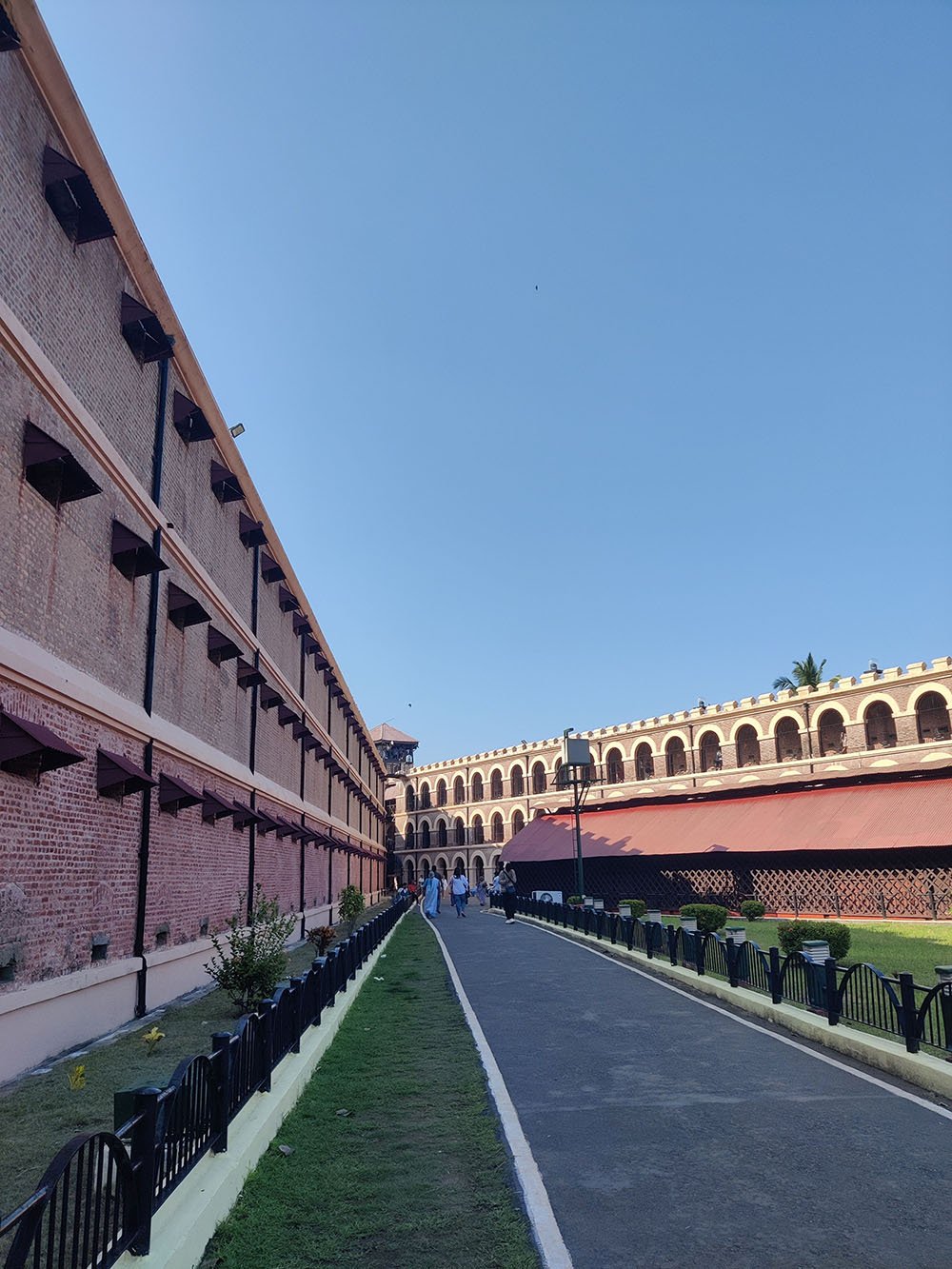
Cellular Jail, popularly known as Kala Pani, is one of India's most important historical monuments and a symbol of the country's struggle for independence. Located in Port Blair, the jail was built by the British colonial government to exile and imprison political prisoners who actively participated in India's freedom movement. Surrounded by the waters of the Bay of Bengal, the prison's isolated location made escape nearly impossible, earning it the infamous name "Kala Pani."
The prison was designed with hundreds of solitary cells, ensuring that prisoners remained completely isolated from one another. Many renowned freedom fighters, including Veer Savarkar, Batukeshwar Dutt, and Yogendra Shukla, were incarcerated here under harsh conditions. Prisoners were subjected to forced labor, physical punishment, and inhumane treatment, making the Cellular Jail a powerful reminder of the sacrifices made during India's fight for independence.
Today, Cellular Jail has been preserved as a National Memorial and attracts thousands of visitors every year. The museum galleries, preserved prison cells, watchtower, and the famous Light and Sound Show vividly narrate the stories of courage, resilience, and patriotism, making it one of the most significant heritage attractions in the Andaman and Nicobar Islands.
Construction of Cellular Jail began in 1896 and was completed in 1906 by the British administration following the Revolt of 1857. The prison was specifically built to isolate political prisoners from mainland India and suppress the growing independence movement. Its unique architecture featured seven wings radiating from a central watchtower, resembling the spokes of a wheel. The design allowed guards to monitor all prison blocks while preventing communication between inmates.
The jail originally contained 693 solitary cells, each measuring approximately 4.5 × 2.7 metres. The cells had only a small ventilator placed high on the wall, ensuring complete isolation. Numerous Indian freedom fighters endured severe punishments here, including solitary confinement, forced oil-mill labor, flogging, and inadequate food and medical care. The Cellular Jail became a symbol of British oppression as well as the extraordinary courage of India's freedom fighters.
After World War II, the jail ceased functioning as a penal institution. Several wings were demolished after independence, but following public demand and efforts by freedom fighters, the remaining structure was preserved. In 1979, the Government of India officially declared Cellular Jail a National Memorial, ensuring that future generations remember the sacrifices made by those imprisoned within its walls.
October to May is the ideal time to visit
By Air:
The nearest airport is Veer Savarkar International Airport, located about 4 km away. Taxis and auto-rickshaws are readily available.
By Rail:
There is no railway network in the Andaman and Nicobar Islands. The nearest rail connectivity is on the Indian mainland.
By Road:
Cellular Jail is located in the heart of Port Blair and is easily accessible by taxis, auto-rickshaws, rental bikes, and local buses.
By Ferry/Boat:
Visitors from mainland India reach Port Blair by passenger ships from Chennai, Kolkata, or Visakhapatnam. The jail is a short drive from Port Blair Port.
No reviews yet — be the first.
Sign in to leave a review — reviews are posted under your account name.