

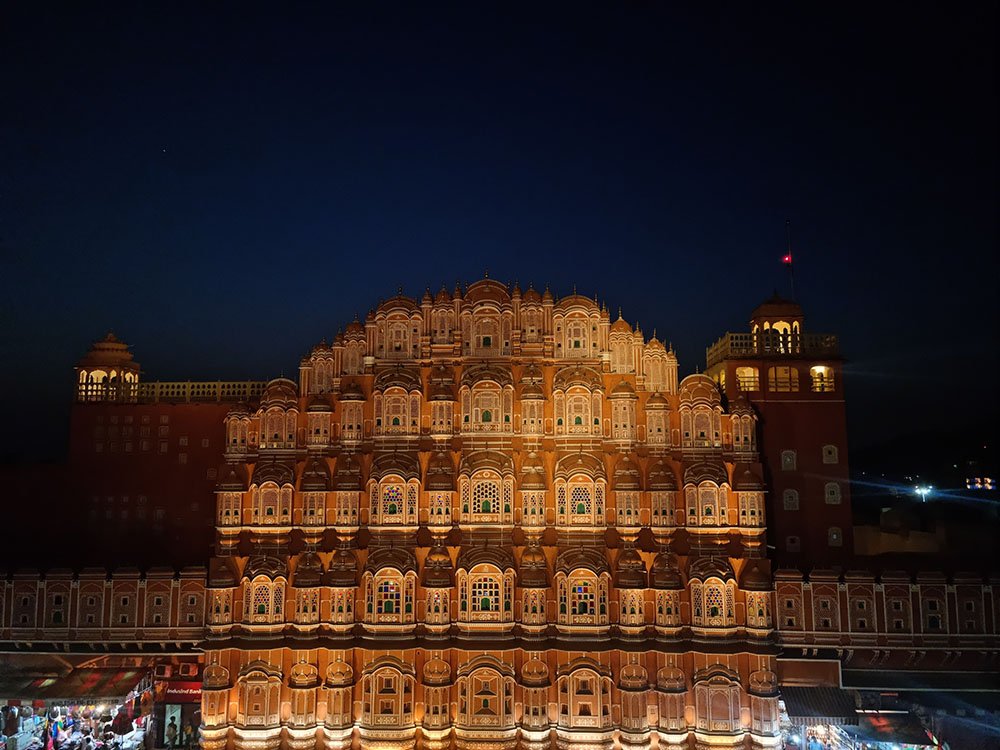
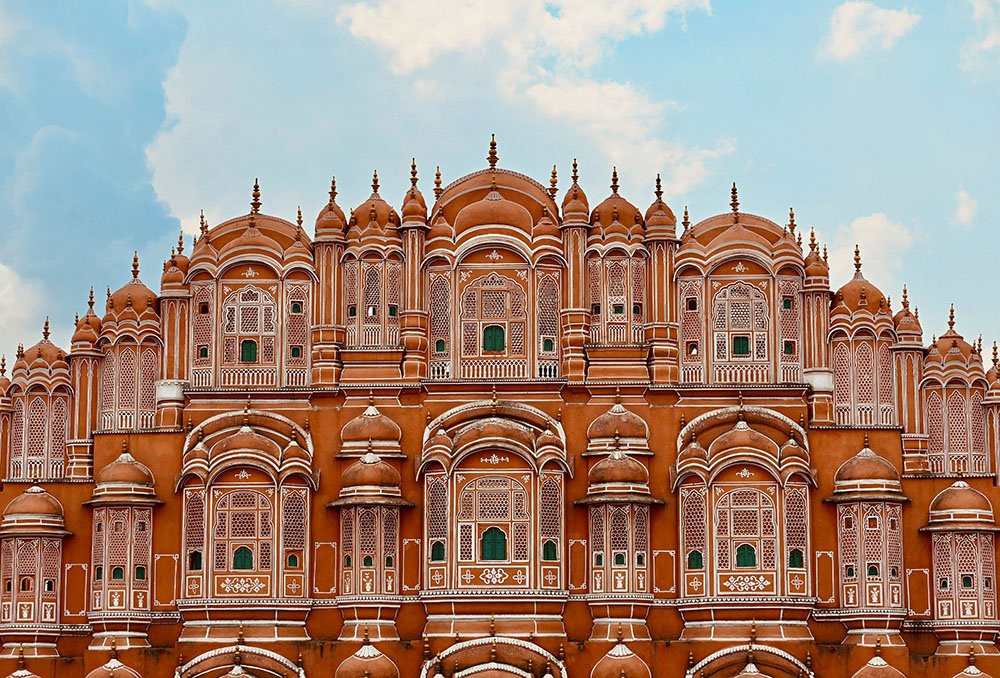
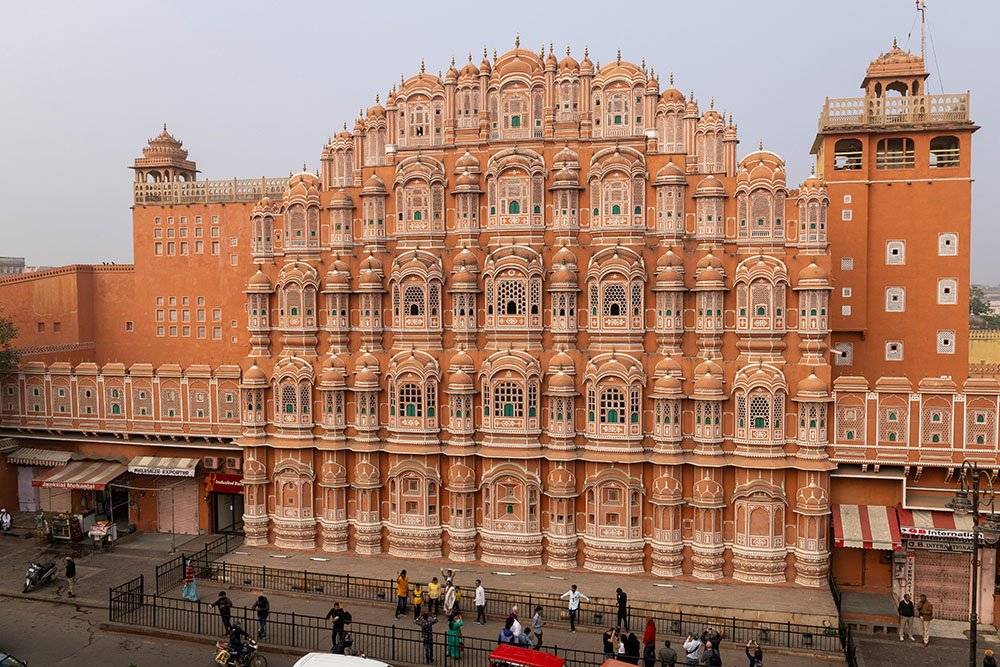
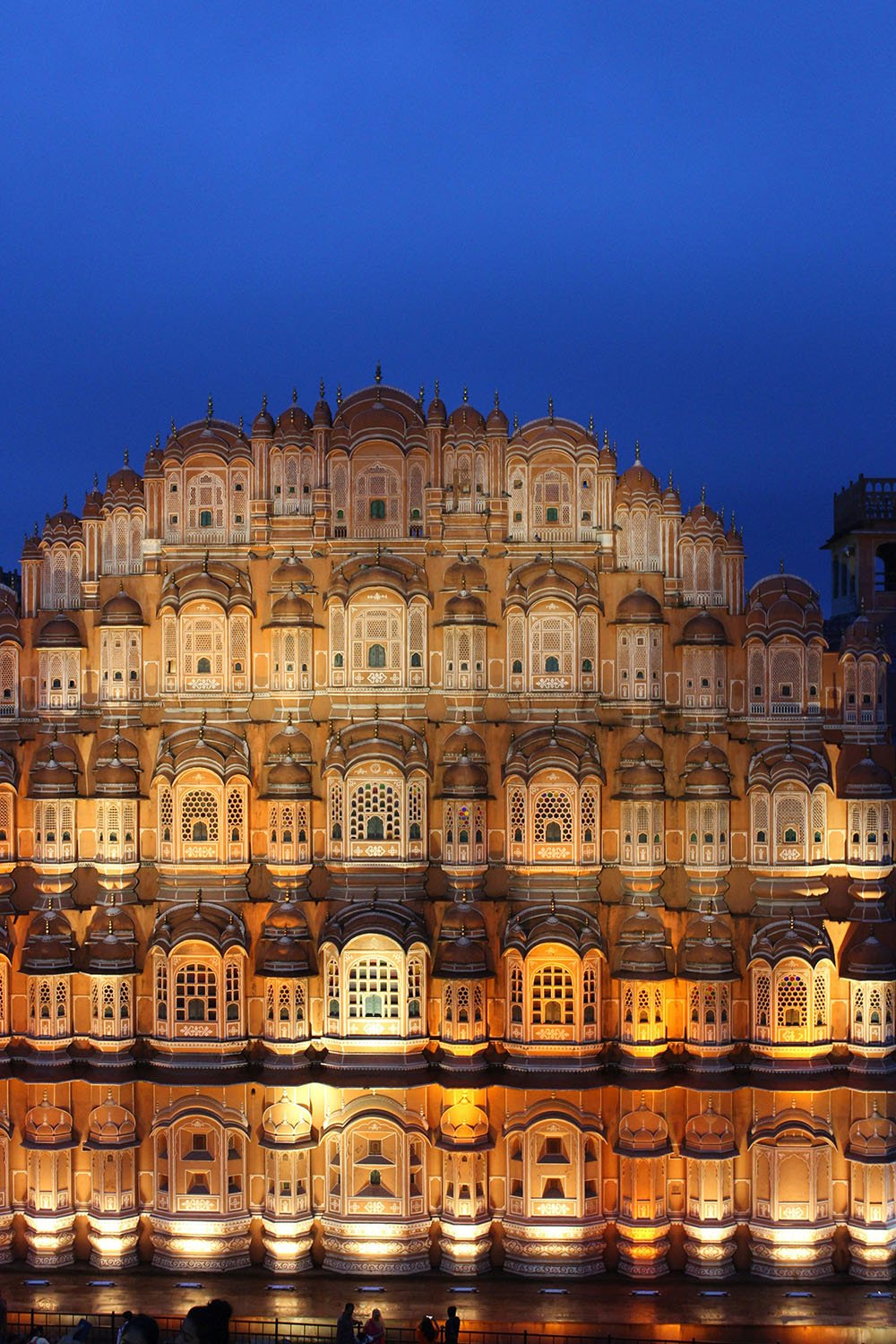
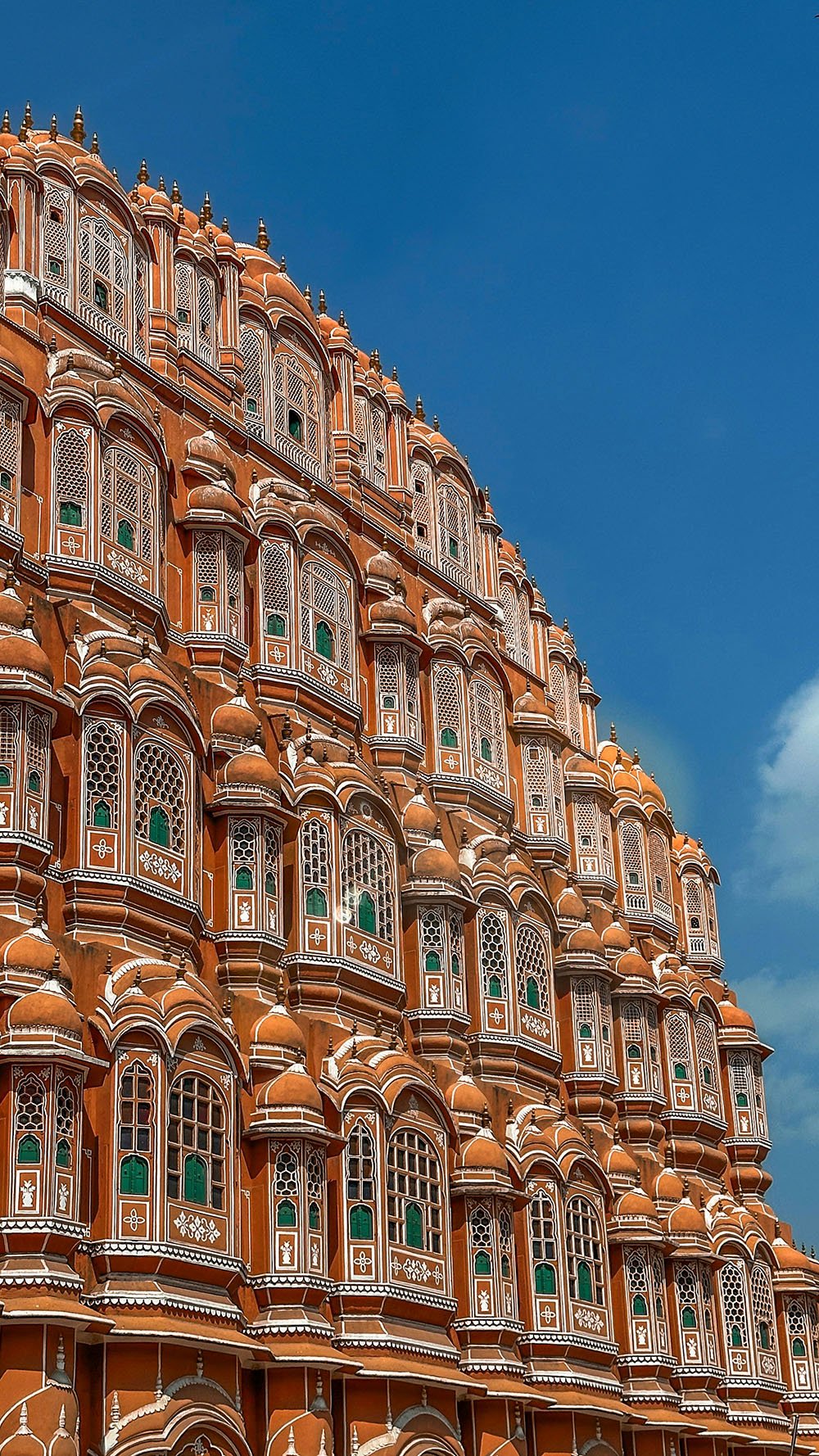
Hawa Mahal, meaning “Palace of Winds,” is one of Jaipur's most iconic landmarks and a celebrated example of Rajput architecture. Built from distinctive pink and red sandstone, the five-storey structure is famous for its elaborate honeycomb façade containing hundreds of small windows, known as jharokhas.
The unique design allowed royal women to observe street life and processions without being seen from outside, while the numerous openings helped circulate cool air through the building. Located in the heart of Jaipur's historic Pink City, Hawa Mahal is one of Rajasthan's most recognizable architectural landmarks.
Hawa Mahal was built in 1799 by Maharaja Sawai Pratap Singh, a ruler of the Kachwaha Rajput dynasty. The structure was designed by Lal Chand Ustad and formed part of the City Palace complex.
The palace was constructed primarily as a viewing gallery for the women of the royal household, who followed the practice of purdah and could watch festivals, processions and everyday activities from behind the screened windows. Its distinctive façade was inspired partly by the architectural form of the Khetri Mahal. Over time, Hawa Mahal became an enduring symbol of Jaipur's royal heritage and distinctive pink sandstone architecture.
October to March; early morning for the best light on the facade.
By Air: Jaipur International Airport is approximately 12–13 km from Hawa Mahal. Taxis, auto-rickshaws and app-based cabs are readily available.
By Train: Jaipur Junction Railway Station is around 5 km away and is well connected to major cities across India.
By Road: Hawa Mahal is located in the centre of Jaipur's old city and is easily accessible by local buses, taxis, auto-rickshaws and app-based cabs. It is also close to other major attractions such as City Palace and Jantar Mantar.
No reviews yet — be the first.
Sign in to leave a review — reviews are posted under your account name.