

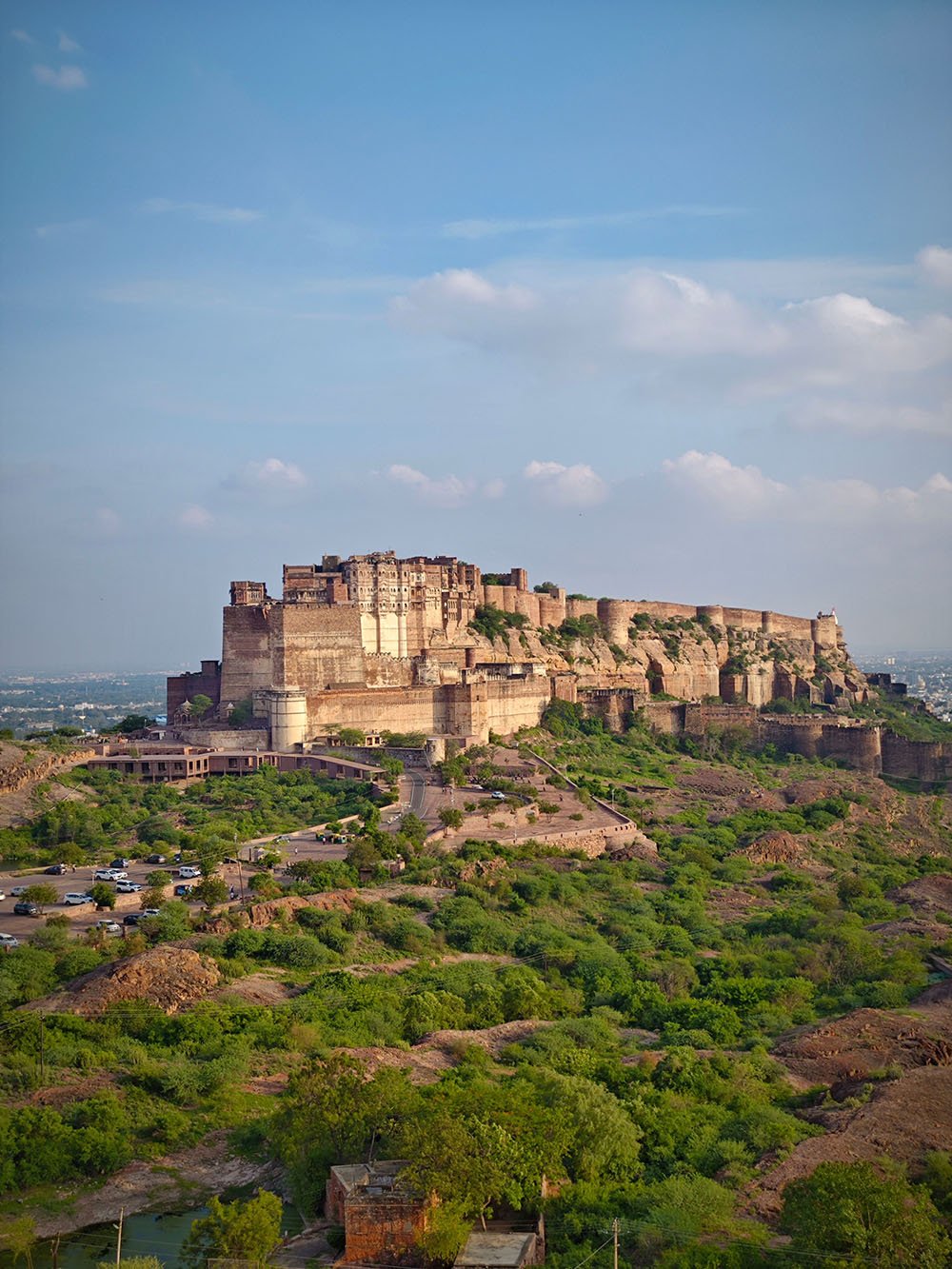
Jodhpur, the 'Blue City', is known for the indigo-washed houses clustered beneath Mehrangarh Fort's imposing sandstone walls, one of the most dramatic fort settings in India, its ramparts rising nearly 125 metres above the old city below. The blue colour, traditionally associated with Brahmin households and believed to help repel insects and reduce heat, has become one of Jodhpur's most recognisable visual signatures, especially when viewed from the fort ramparts above.
Beyond the fort, Jodhpur's Sardar Market and clock tower area offer a lively, less touristy bazaar experience, and the city's position on the edge of the Thar Desert has made it a practical gateway for those continuing on to Jaisalmer and the deeper desert regions of western Rajasthan.
Jodhpur was founded in 1459 by Rao Jodha, a Rajput ruler of the Rathore dynasty. He established the city after moving the capital of the Rathore kingdom from Mandore to a more strategically secure location around the rocky hill where Mehrangarh Fort was built.
Jodhpur developed into an important centre of trade because of its location along routes connecting the Thar Desert with Gujarat and northern India. The Rathore rulers gradually expanded the city, constructing palaces, temples, gardens and other monuments. The old city's distinctive blue houses became one of Jodhpur's defining features, while Mehrangarh remained the centre of its royal and military heritage.
October to March.
By Air: Jodhpur Airport is located around 5–8 km from the city centre and has regular flights connecting the city with major Indian destinations.
By Train: Jodhpur Junction is a major railway station with connections to Delhi, Jaipur, Mumbai, Ahmedabad, Jaisalmer and other cities.
By Road: Jodhpur is well connected by road with Jaipur, Udaipur, Jaisalmer, Bikaner and other Rajasthan cities. Government and private buses, taxis and rental cars are available.
No reviews yet — be the first.
Sign in to leave a review — reviews are posted under your account name.